SecID CIS Assessment: Automated Assessment & Compliance Platform

SecID is a robust, enterprise-grade security and compliance solution designed to enable organizations to meet and maintain regulatory and industry compliance standards across diverse IT environments. Built with flexibility and scalability in mind, SecID supports a wide range of frameworks and guidelines, including CIS (Center for Internet Security) benchmarks, NIST (National Institute of Standards and Technology) frameworks, CISA (Cybersecurity and Infrastructure Security Agency) recommendations, DISA (Defense Information Systems Agency) STIGs, and other key security standards.

SecID is purpose-built to secure and monitor both cloud and on-premises infrastructure, offering deep integration with Microsoft technologies (such as Azure, Active Directory, Microsoft 365, Windows Server) as well as non-Microsoft systems across hybrid and multi-cloud environments. Its centralized platform provides comprehensive visibility, real-time policy enforcement, automated compliance checks, and detailed reporting to help organizations streamline audits, reduce risk, and maintain a strong security posture.

Whether you’re managing a government environment, enterprise IT landscape, or cloud-native workloads, SecID delivers the tools and intelligence needed to ensure alignment with best practices, regulatory mandates, and internal security policies.

The platform leverages self-learning techniques to adapt and optimize assessments based on the environment, ensuring relevant and accurate results. Once issues are identified, SecID automatically notifies designated teams, enabling timely remediation and continuous compliance.

Image

Global Security Score for All Technologies

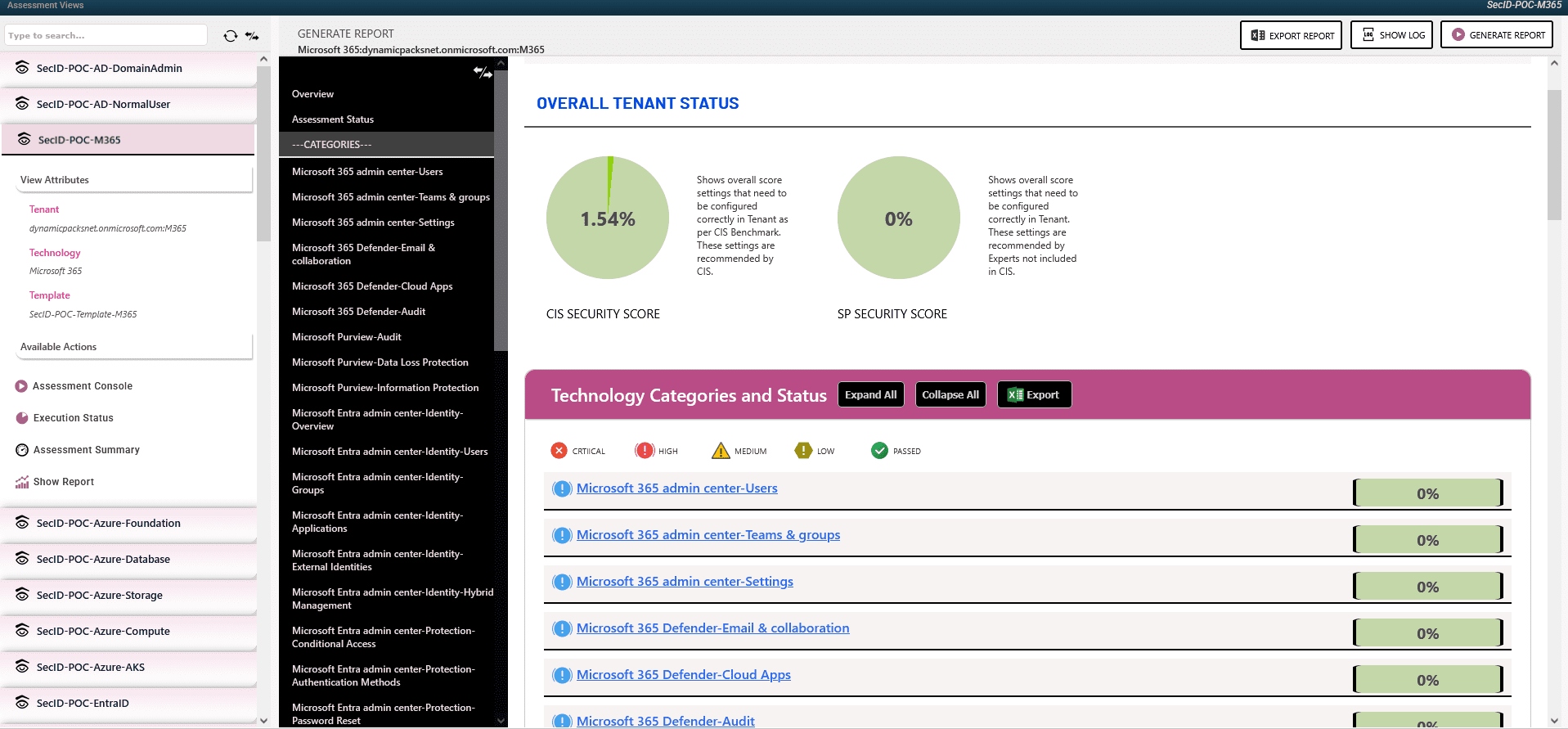
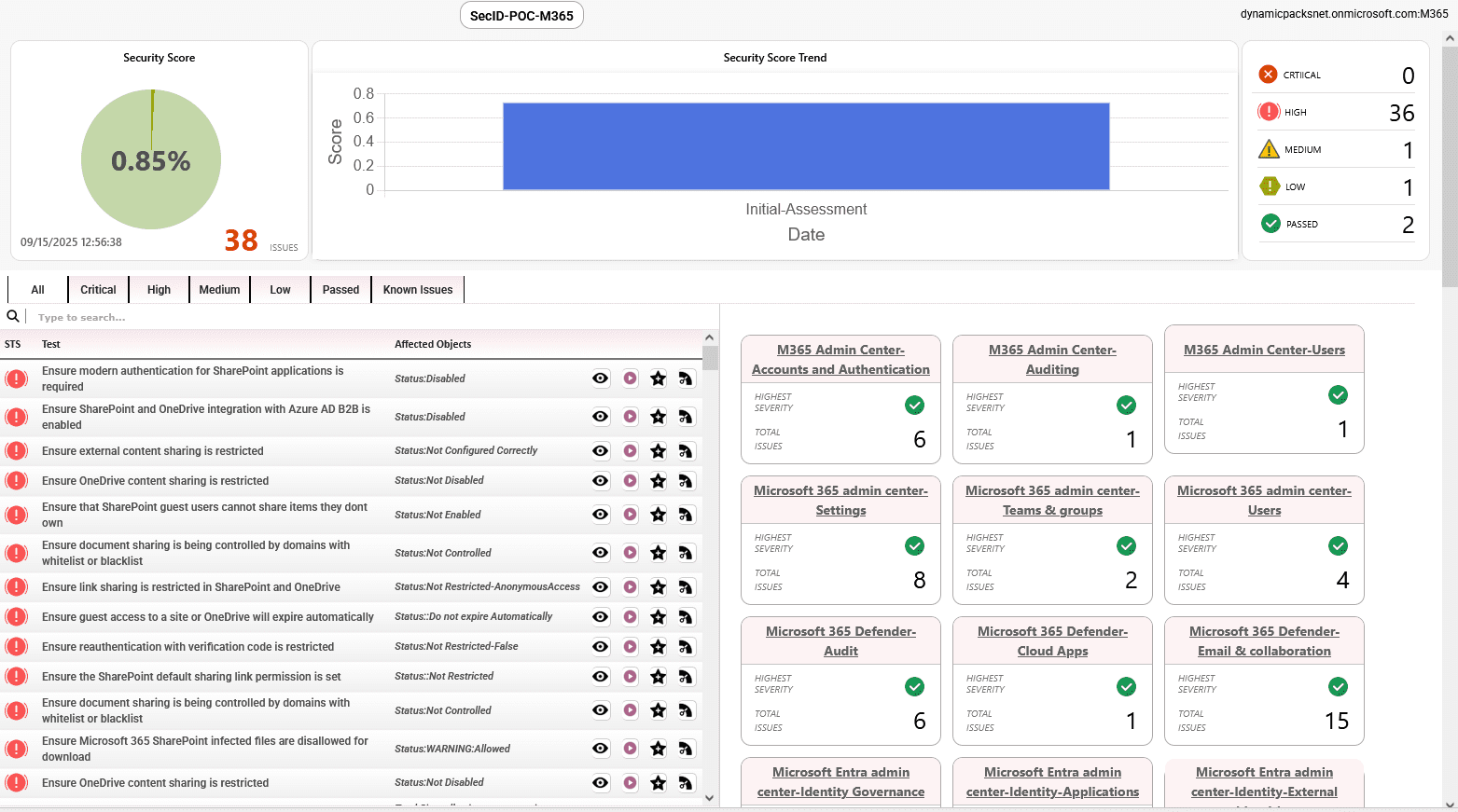
SecID provides a Global Security Score dashboard that offers an overview of the security posture across all integrated technologies. Through its automated and scheduled assessments, run at user-defined intervals, SecID continuously evaluates each technology. The Global Security Score helps you quickly identify which systems may require attention or remediation, enabling proactive risk management across your environment.
SecID Compliance

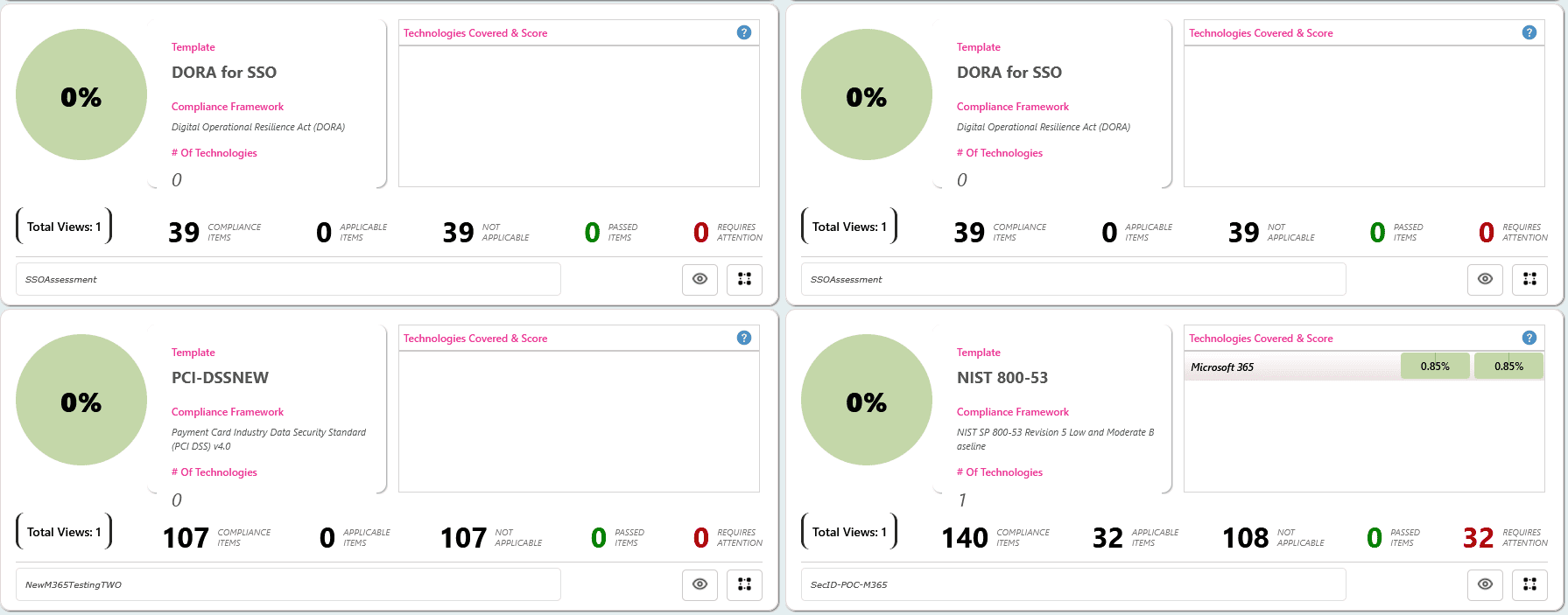
SecID supports over 25 compliance frameworks, including PCI DSS, NIST, DORA, NIS, NIS-2, Australian Compliance, and more. To generate compliance reports, simply create a compliance framework template and add the relevant technologies. SecID will then map the associated risks and controls, providing a detailed and actionable compliance report tailored to your selected framework.

Governance

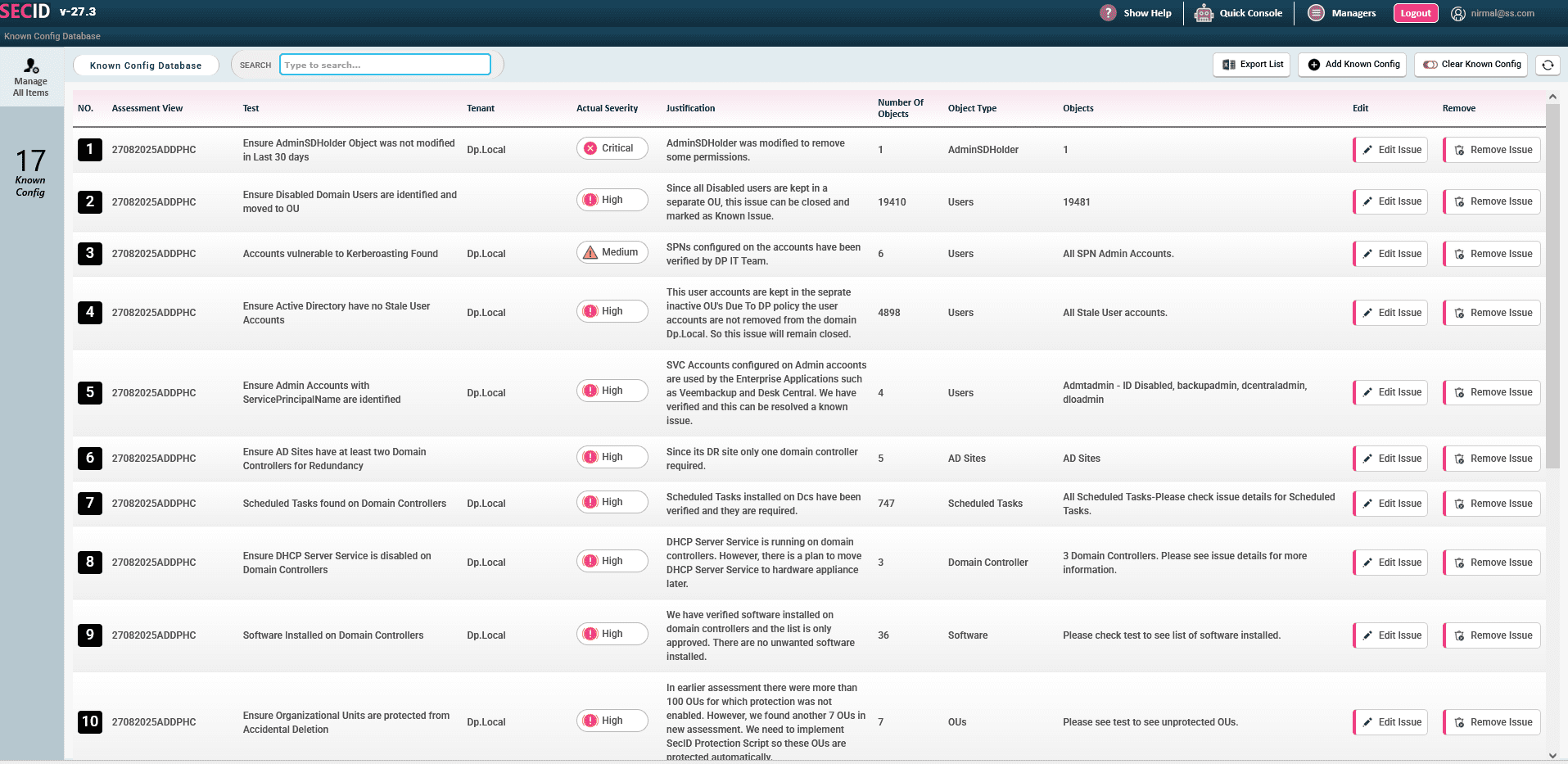
SecID helps you gain visibility into the overall issues identified within a technology and provides insights into its governance and control status, enabling better risk management and decision-making.

Managing Risks

SecID provides a centralized platform to identify, assess, and manage risks across multiple technologies. With its automated risk discovery engine, SecID continuously monitors systems to detect misconfigurations, excessive permissions, and policy violations. Risks are categorized by severity and mapped to compliance frameworks, enabling organizations to prioritize remediation efforts effectively. Through detailed dashboards, customizable risk levels, and scheduled assessments, SecID empowers security teams to maintain visibility, enforce governance, and reduce overall risk exposure across their technology landscape.

40 Technology Support

SecID supports automated assessments for over 40 technologies, including operating systems, cloud platforms, directories, databases, and security tools. All assessments are fully automated and scheduled, enabling continuous monitoring, risk detection, and compliance tracking without manual effort. This ensures consistent visibility and faster response to security issues across your entire technology environment.

SecID Assessment Report

SecID assessments can be run automatically on a schedule or manually through the Assessment Console. The generated reports are available for review within the console and can also be exported for sharing with customers or stakeholders, ensuring flexible and efficient reporting.

File Servers Assessment

SecID is the first tool to offer file server assessments aligned with CIS benchmarks and other compliance frameworks. It supports assessments across multiple file servers, identifying misconfigurations and security gaps. The tool generates a comprehensive report with actionable insights to help resolve issues and strengthen file server security.

Schedule Assessments

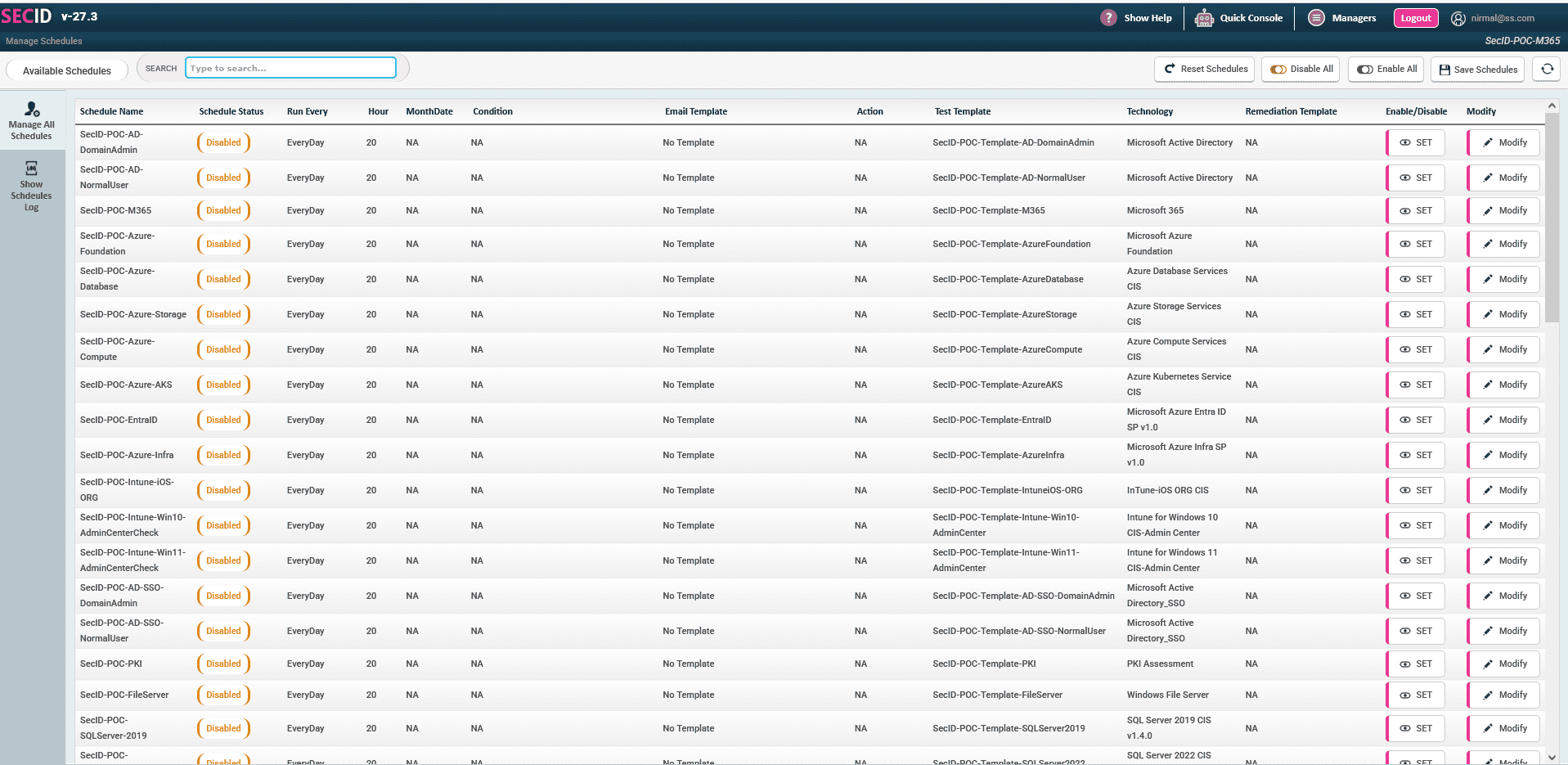
SecID allows users to schedule assessments at regular intervals, ensuring continuous monitoring and risk detection without manual intervention. You can define custom schedules based on your organization’s internal policies—such as weekly, monthly, or quarterly scans. This flexibility helps align assessments with internal audit cycles, compliance requirements, or security best practices, ensuring risks are identified and addressed proactively.

PKI Assessment

SecID is the first tool to offer a dedicated PKI (Public Key Infrastructure) assessment, helping organizations evaluate the security and configuration of their certificate services. It automatically scans PKI components to identify misconfigurations, weak cryptographic settings, and potential risks. The assessment provides clear, actionable insights to strengthen your certificate authority infrastructure and align with security best practices and compliance standards.

Quick POC

Setting up a Proof of Concept (POC) in SecID is fast and efficient—taking just about 1 hour to configure for the required technologies. For example, if you’re conducting a POC for 10 technologies, simply provide the necessary inputs and use the Views Executor to run the assessments. The Views Executor ensures that all selected Assessment Views are executed sequentially, streamlining the process and delivering quick, actionable results.

Manage Templates

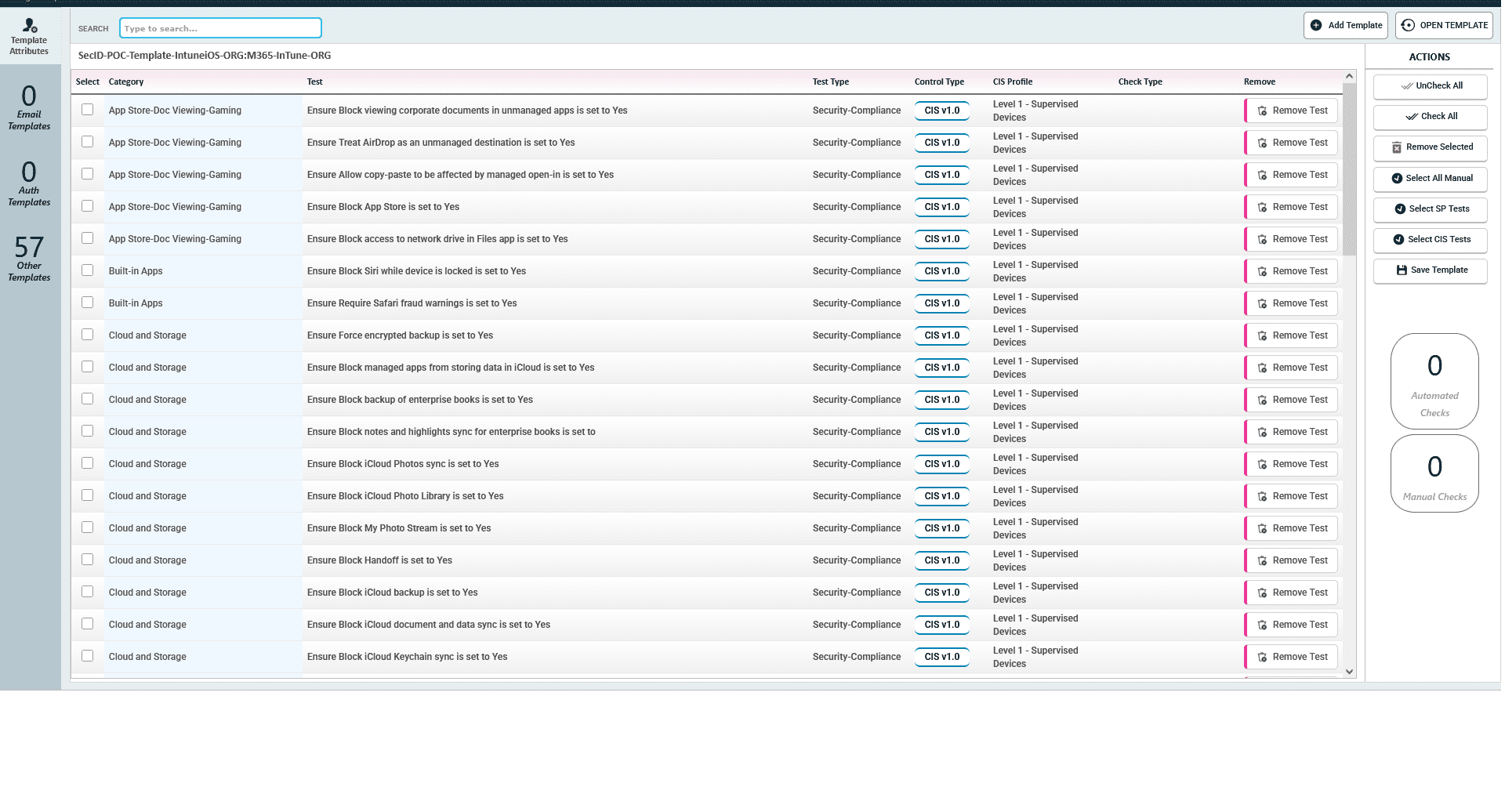
SecID allows you to create and customize templates for each supported technology to suit your specific requirements. You can choose to exclude certain tests that are not relevant to your environment or modify template settings to align with internal policies and configurations. This flexibility ensures that every assessment is tailored and accurate for your organizational needs.

Supported Compliance Frameworks

AICPASOC

AICPA SOC 2

AICPA SOC 2 (System and Organization Controls 2) is a widely recognized auditing standard developed by the American Institute of Certified Public Accountants (AICPA). It focuses on evaluating an organization’s controls related to security, availability, processing integrity, confidentiality, and privacy of customer data. SOC 2 reports are specifically designed for service providers that handle sensitive information, ensuring they meet strict criteria for managing and protecting data. The framework helps businesses demonstrate their commitment to data security and build trust with customers, partners, and regulators.

Australian Signals Directorate (ASD) Essential Eight

Australian Signals Directorate (ASD) Essential Eight

The Australian Signals Directorate (ASD) Essential Eight is a cybersecurity framework developed by the Australian government to help organizations mitigate cyber threats. It outlines eight prioritized mitigation strategies that focus on preventing and limiting the impact of cyber attacks, such as ransomware and malware. The Essential Eight covers areas like application whitelisting, patching operating systems and applications, restricting administrative privileges, and user application hardening. It’s widely adopted by both public and private sectors in Australia to strengthen their security posture and reduce vulnerabilities.

CISA Cybersecurity Performance Goals (CPGs) v1.0.1

CISA Cybersecurity Performance Goals (CPGs) v1.0.1

The CISA Cybersecurity Performance Goals (CPGs) v1.0.1 are a set of clear, measurable cybersecurity objectives developed by the Cybersecurity and Infrastructure Security Agency (CISA) to help organizations strengthen their cyber defenses. These goals provide a prioritized roadmap for improving cybersecurity practices across various sectors, focusing on critical areas such as asset management, vulnerability management, identity and access control, and incident response. By adopting CPGs, organizations can better align their security efforts with evolving threats and enhance their overall resilience.

Cloud Security Alliance (CSA) Cloud Controls Matrix (CCM) v4

Cloud Security Alliance (CSA) Cloud Controls Matrix (CCM) v4

The Cloud Security Alliance (CSA) Cloud Controls Matrix (CCM) v4 is a comprehensive cybersecurity control framework tailored for cloud computing environments. It provides a detailed set of security principles and controls mapped to industry standards and regulations, helping organizations assess and manage cloud-specific risks. CCM v4 covers key domains such as data security, identity and access management, infrastructure security, and governance, enabling cloud service providers and customers to ensure secure cloud adoption and compliance.

Criminal Justice Information Services (CJIS) Security Policy v5.9.5

Criminal Justice Information Services (CJIS) Security Policy v5.9.5

The Criminal Justice Information Services (CJIS) Security Policy v5.9.5 is a set of security requirements established by the FBI to protect the confidentiality, integrity, and availability of criminal justice information (CJI). This policy applies to all entities that access, process, or store CJI, including law enforcement agencies and contractors. It mandates strict controls around data encryption, user authentication, access control, and audit logging to ensure that sensitive information is safeguarded against unauthorized access and cyber threats, supporting law enforcement’s mission-critical operations.

Criminal Justice Information Services (CJIS) Security Policy v6

Criminal Justice Information Services (CJIS) Security Policy v6

The Criminal Justice Information Services (CJIS) Security Policy v6 is the latest iteration of the FBI’s security standards designed to protect criminal justice information (CJI). It establishes mandatory controls for all entities accessing, handling, or storing CJI to ensure data confidentiality, integrity, and availability. Version 6 introduces enhanced requirements for encryption, multi-factor authentication, cloud security, and continuous monitoring, reflecting evolving cybersecurity threats and technologies. Compliance with CJIS Policy v6 is critical for maintaining trust and operational effectiveness within the law enforcement and criminal justice communities.

Cyber Risk Institute (CRI) Profile v2.0

Cyber Risk Institute (CRI) Profile v2.0

The Cyber Risk Institute (CRI) Profile v2.0 is a cybersecurity framework designed to help organizations assess and manage cyber risk through a standardized, simplified approach. It provides a clear profile of essential cybersecurity practices and controls, focusing on practical implementation to improve security posture and resilience. CRI Profile v2.0 emphasizes risk-informed decision-making, enabling organizations to align cybersecurity efforts with business objectives and better communicate risk to stakeholders.

Cybersecure Canada CANCIOSC 1042021

Cybersecure Canada CAN/CIOSC 104:2021

Cybersecure Canada CAN/CIOSC 104:2021 is a national cybersecurity certification standard developed to help Canadian organizations strengthen their cybersecurity practices. It outlines a set of baseline requirements for managing cyber risks, focusing on governance, risk management, incident response, and protection of critical assets. This framework is designed to be accessible for organizations of all sizes and sectors, promoting a consistent and effective approach to cybersecurity across Canada while enhancing trust among customers, partners, and regulators.

Image

Learn Why Perform Health & Configuration Assessment as part of your Active Directory Security Assessment

If you have made the decision to conduct an Active Directory Security Assessment for your production AD Forests, it is crucial to recognize the potential security threats that may exist within your Active Directory environment. However, neglecting to address health and configuration issues poses a significant security risk. In this article, we will explore the importance of performing a “complete” Active Directory assessment, in addition to recommended security tests by organizations such as MITRE and ANSSI.

Learn More
Translate »
Index